From Kurukshetra to the conference room: what the Mahabharata teaches us about change management.
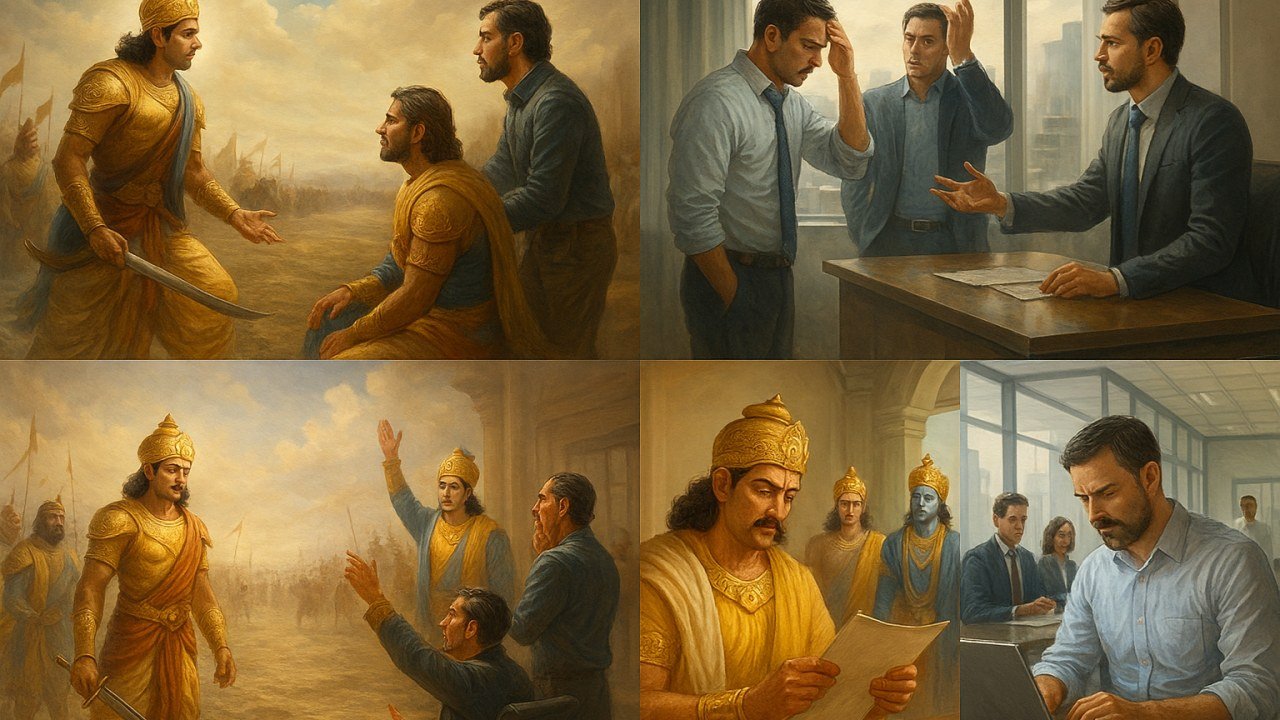
Change is never only external. It stirs emotions, tests values and challenges legacy.
From Arjun's hesitation to Yudhishthir's ethical governance, the Mahabharata offers timeless lessons in leadership. Through chaos, resistance and rebuilding, each character reflects a real problem faced during transformation.
Here are five moments that show how true leaders evolve, act, and make change that lasts.
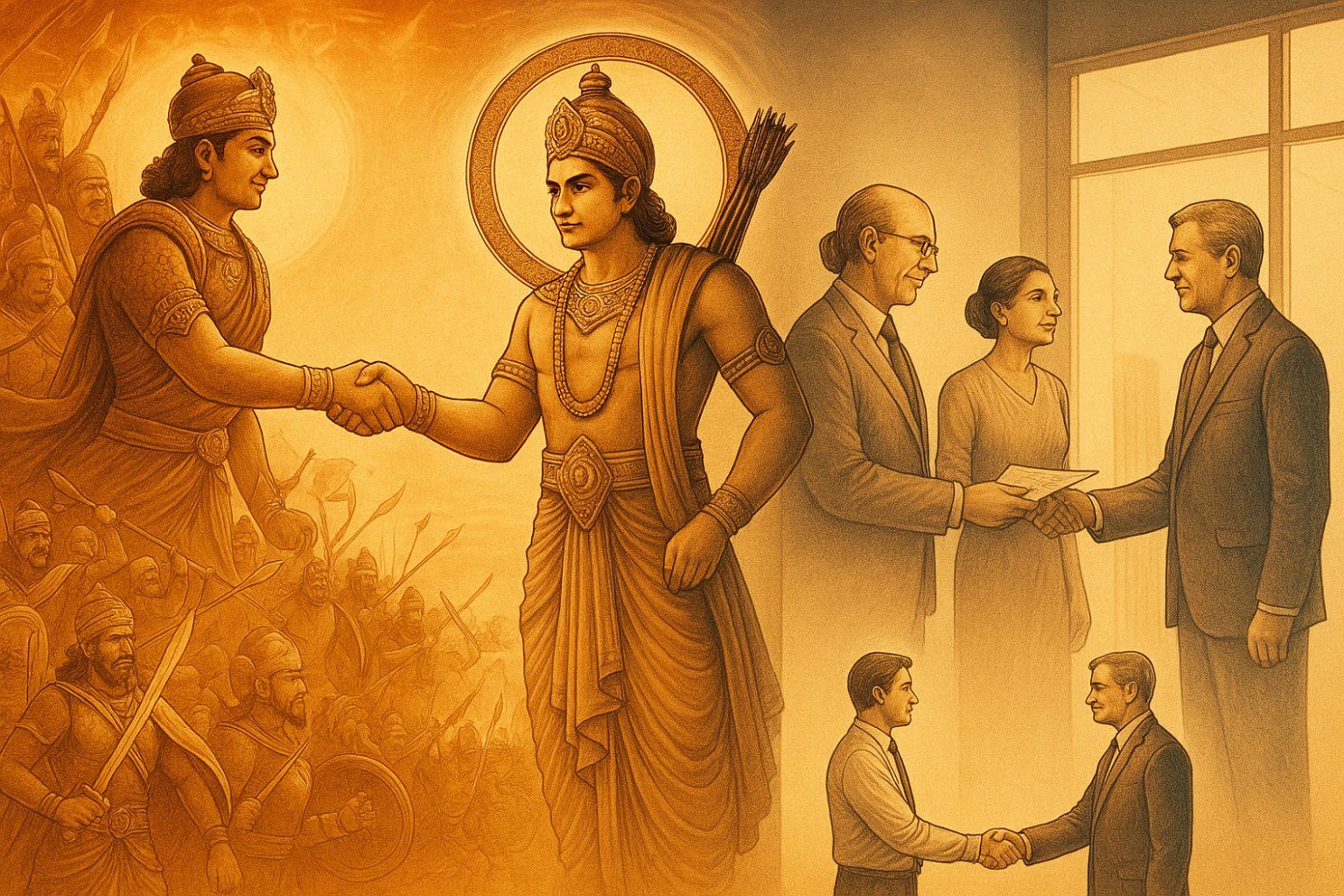
Lord Shri Krishna, the mastermind of change leadership
The best illustration of transformational leadership is Krishna's role in the Mahabharat. Despite never using a weapon, he shapes every aspect of the story, from strategy to conclusion. Krishna is a change agent who, as with Arjuna in the Bhagavad Gita, leads people to self realisation rather than making the decision for them. He is aware of human emotion, of timing, and of strategic communication.
His leadership during the peace talks with the Kauravas is among the best examples. Though he is entirely capable of strategic warfare, he opts first for communication and diplomacy, proposing a settlement in which the Pandavas take only five villages. When Duryodhana declines, Krishna coolly changes course from diplomacy to combat. That is what a real leader does: exhausts the better path, then commits fully to the harder one.
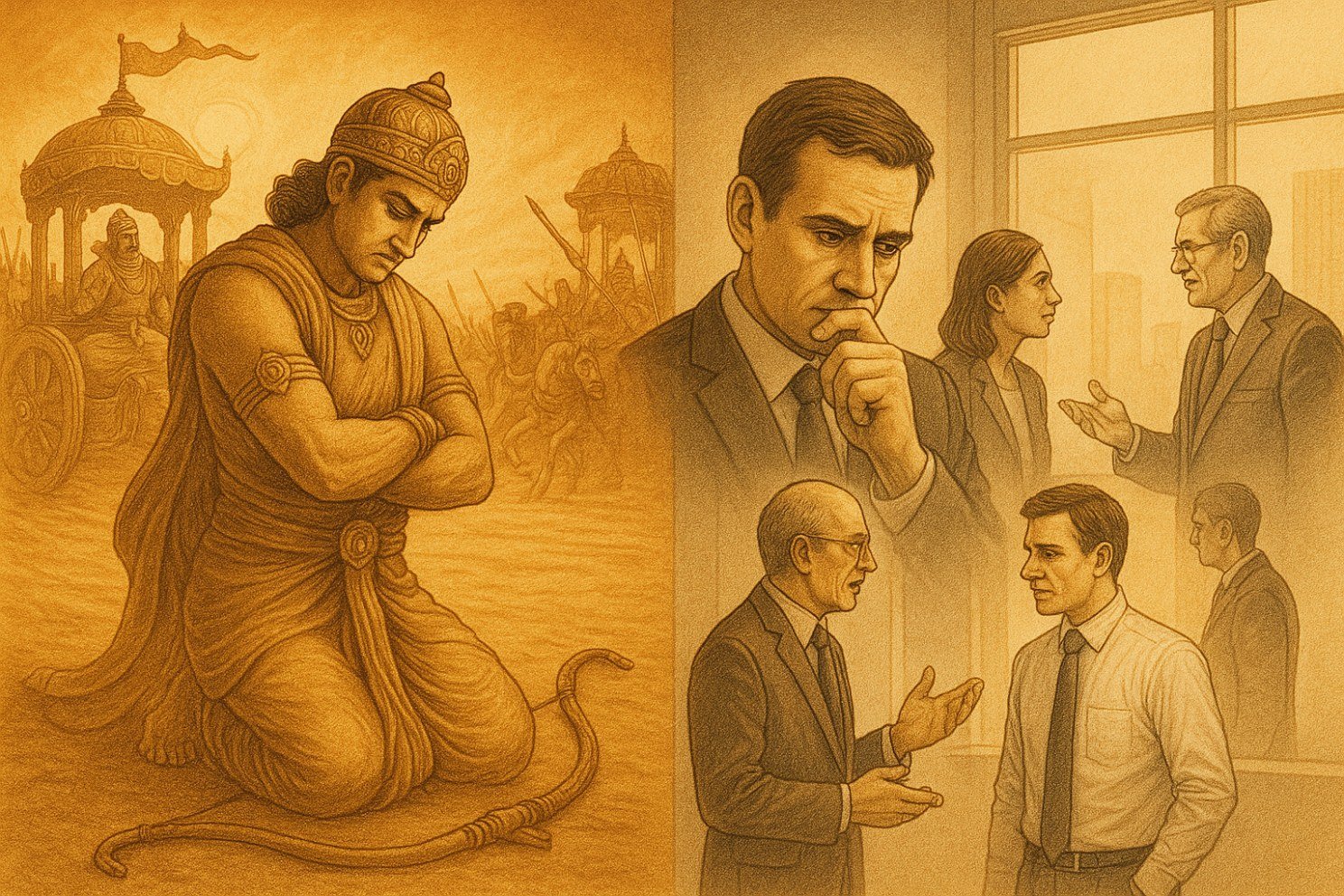
Managing resistance: Arjun's moral dilemma
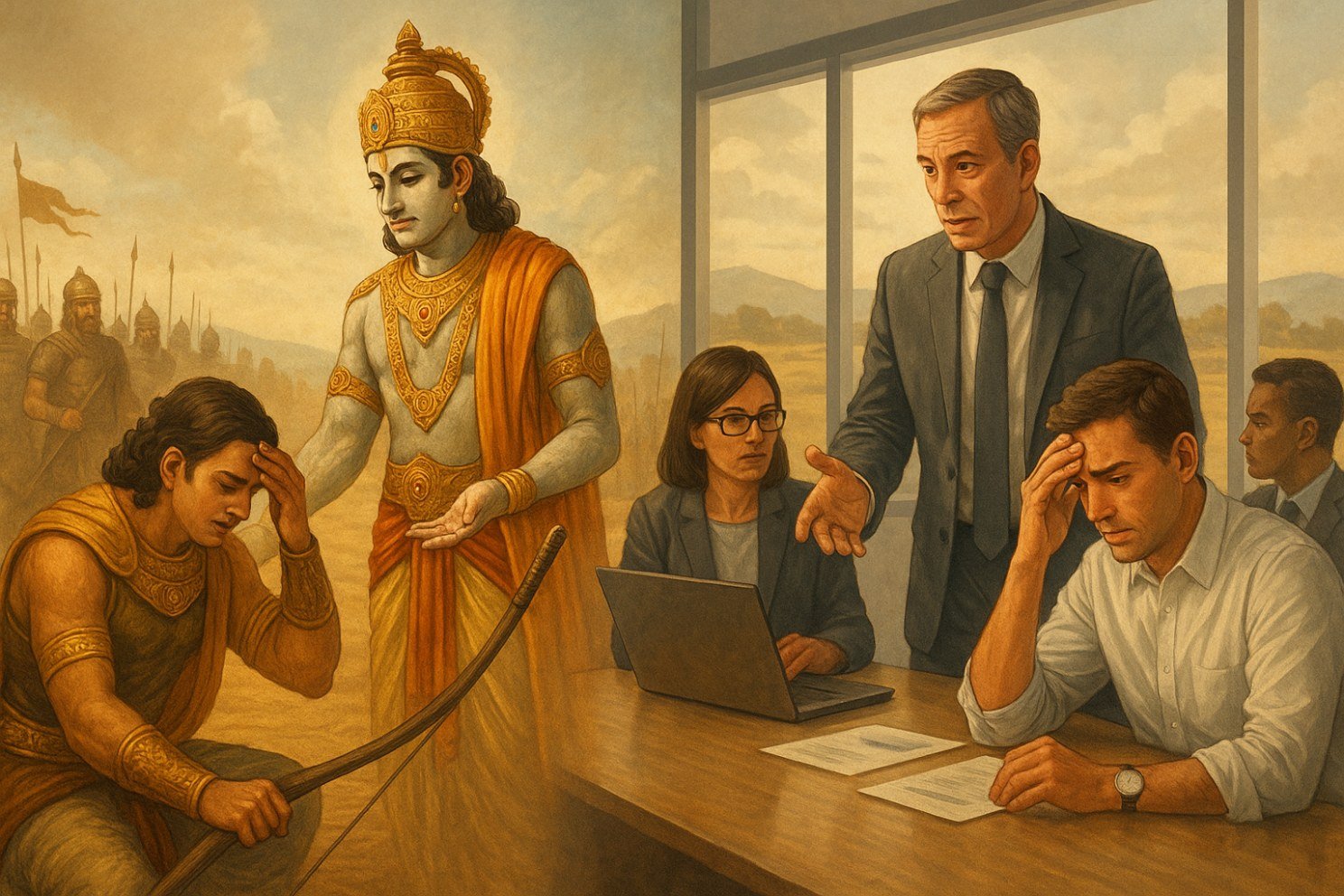
Arjun, the Pandavas' chief marksman, embodies the moment when a leader freezes because personal ties blur the line between right and wrong. Standing on the sunlit sands of Kurukshetra he grips his bow but cannot loose an arrow when he sees cousins, gurus and beloved friends in the enemy ranks. He knows dharma demands the fight, from restoring order to ending tyranny, yet his heart screams to spare the people he loves, and that scream drowns out rational duty. His pause does not come from doubting the cause. It springs from the turmoil that sways almost every reformer when the next step could fracture family or comfort.
The scene hits hardest when, just before the conch shells announce the battle, Arjun drops his bow and declares he will not kill. He knows Duryodhana's greed sparked the war, yet loyalty anchors his heart. Much like executives who see a toxic culture and hesitate to remove the source of the poison, Arjun's inner tug of war shows how emotion and ethics can chain even the strongest. Only Krishna's steady questions pull him back, clarify his role, and push him onto the uneasy road where courage meets duty.
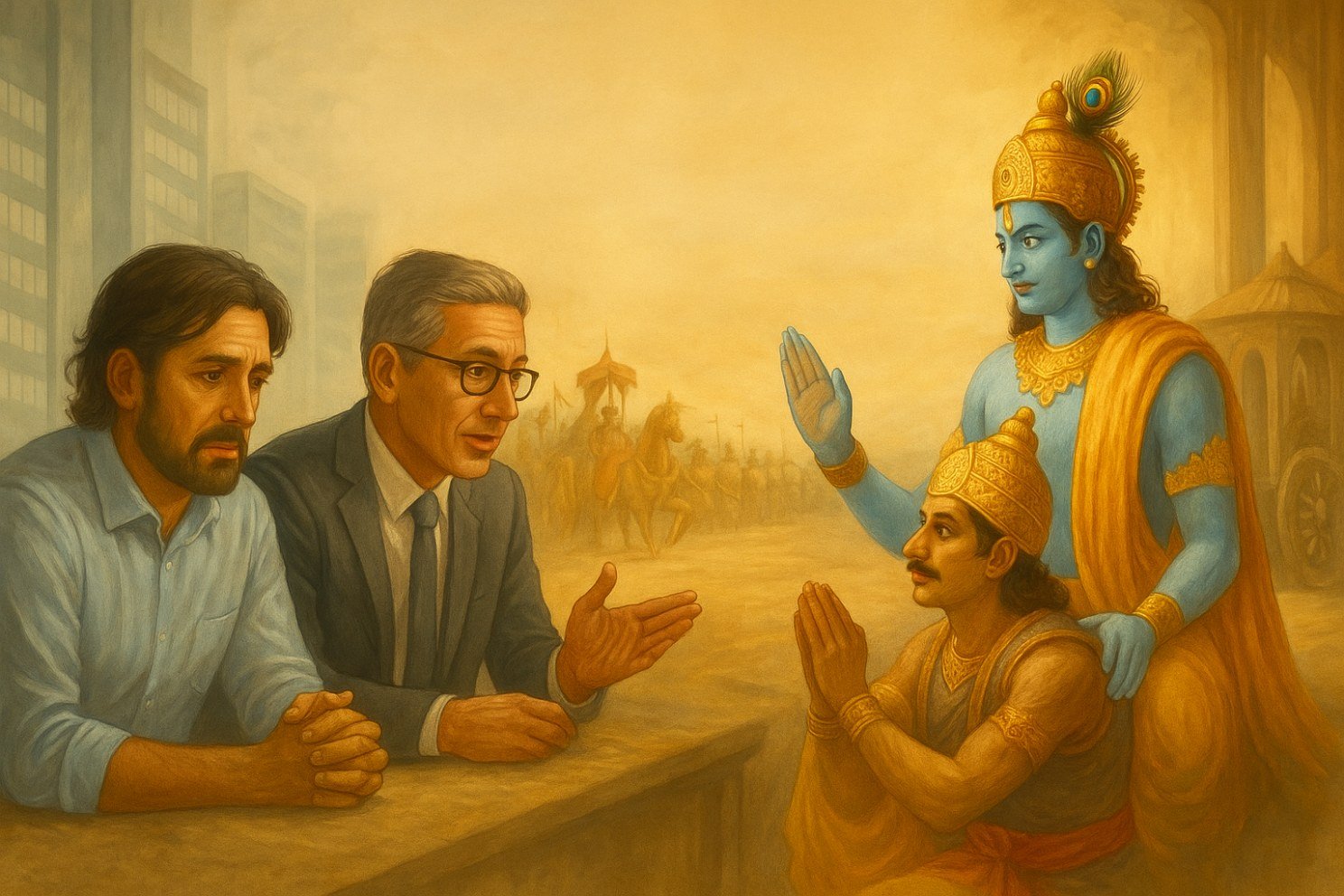
Communication strategy: the Bhagavad Gita blueprint
Communication sits at the heart of every change effort, and the dialogue between Krishna and Arjuna is a timeless masterclass. When Arjuna freezes on the plain, gripped by fear and moral turmoil, Krishna could easily have shouted orders. Instead he suspends hostilities and invites a patient, human exchange that reaches both Arjuna's head and heart. His words are calm, philosophical and gently logical rather than heavy handed, so Arjuna gradually rediscovers his own purpose, his swadharma, without being bullied into it.
Stories, images and simple analogies turn profound ideas into everyday language. He tailors each metaphor the way a modern executive adjusts a message for engineers, sales staff or sceptical customers. Rather than brush aside Arjuna's anger and doubt, Krishna acknowledges them and walks step by step through the inner conflict.
The crowning moment comes when he finally says: now do as you wish. That gesture grants Arjuna real space to accept or reject the truth, and it shows that leadership does not force compliance. It earns conviction, and leaves the decision with the person being asked to change.
Handling chaos: Kurukshetra as a symbol of transition
The plain of Kurukshetra is more than a historical battleground. It stands as an enduring symbol of the psychological noise we all feel whenever life or a business turns upside down. Like an organisation that suddenly confronts lost markets, or a team facing a new boss, the heroes of the Mahabharata wrestle with doubts that show up in the open field. That ground becomes their proving place, and ours: somewhere the fog must lift, the fears must speak, and shaky hearts still have to swing a sword.
When the first horns call, Arjun freezes. From where he stands he does not see rivals. He sees brothers, mentors, the old at his feet and the young in his arms. Unable to separate kinship from obligation, he lowers his bow. That is the classic high stakes freeze every leader meets during a merger, a culture overhaul or a sudden market jolt.
At that fragile hinge Krishna steps in. He does not shove Arjun forward; he clears the inner smoke. Through the Gita he hands him three basic tools: steadiness, clear aim, and a rare lightness that lets results sit in the hands of destiny. Work with those, Krishna seems to say, and action can be wise instead of knee jerk.
Embedding the change: Yudhishthir's post war rebuilding
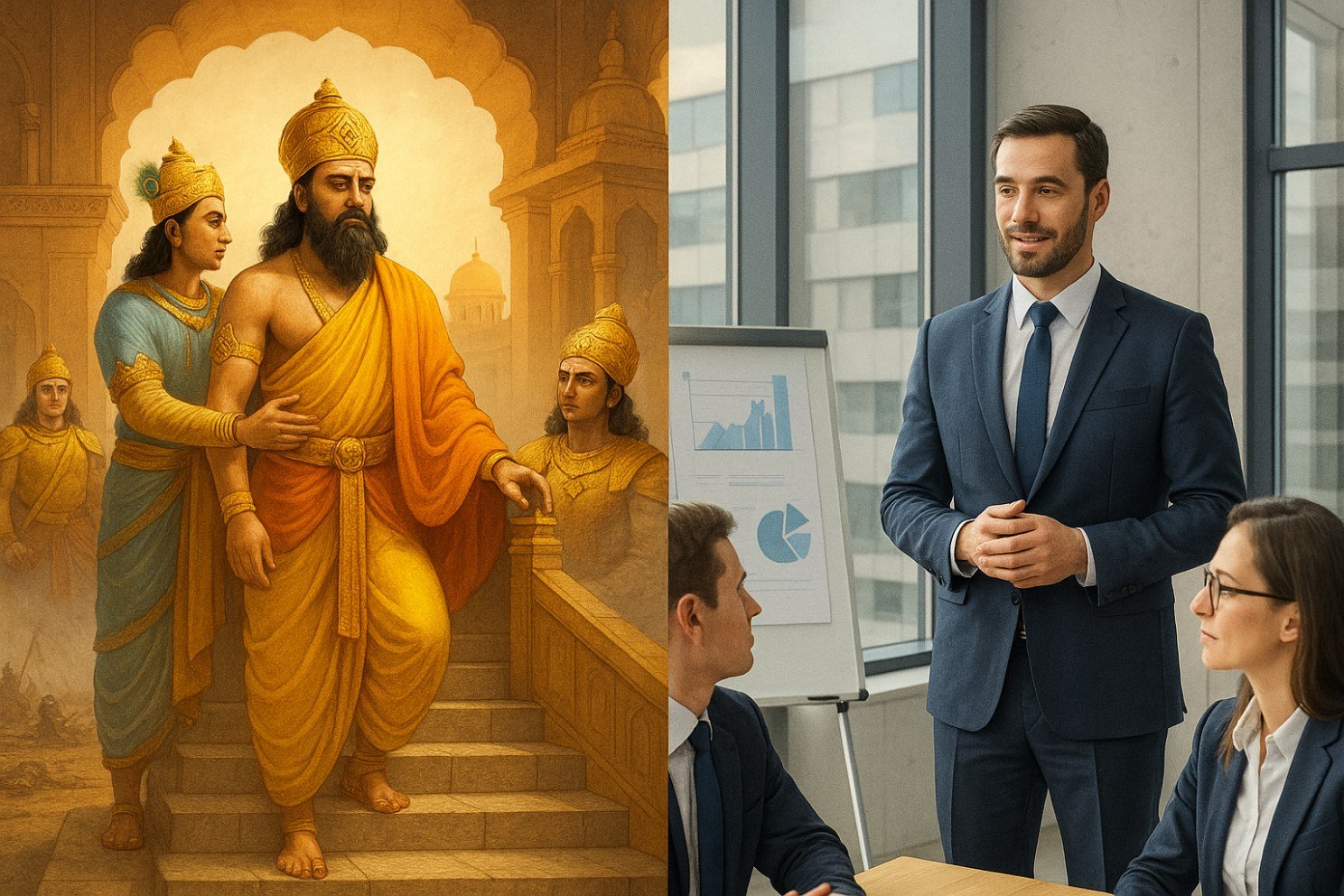
Victory did not close the story for Yudhishthir. In many ways it opened the most testing chapter of his life: the slow task of putting a wrecked society back together. The throne was his, yet he hesitated to climb it, haunted by the toll of conscience that war demands. With gentle coaxing from Krishna and steadfast support from his brothers he finally took the crown, not because he craved power, but because duty would not let him look away.
His rule rested on real humility, deep compassion and an iron devotion to dharma. Under his watch the realm became known as Dharma Rajya, a place where justice, fairness and clear accountability shaped every encounter between ruler and ruled. He paid close attention to ordinary voices, chose ministers who feared neither truth nor question, and placed moral choices ahead of the perks that lure leaders off course.
Transparency, welfare and stubborn efforts at reconciliation marked the early years and gradually eased the scars. Yudhishthir did not force change from outside. He wove it into the everyday fabric, so the ideals fought for on the plain lived calmly through the work of government. In today's language he is the custodian who follows hard change: he does not steer while the beams go up, but he keeps the new house standing and serving people with honour.