He didn't need armour. He had courage.
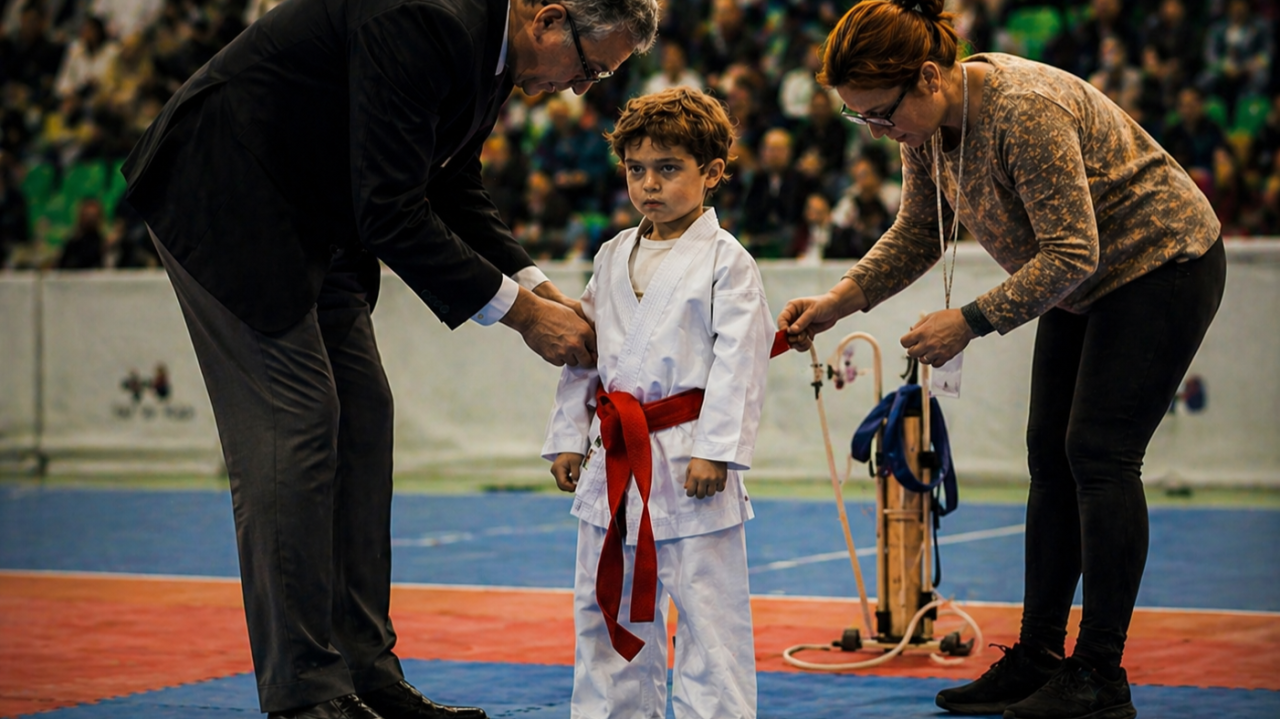
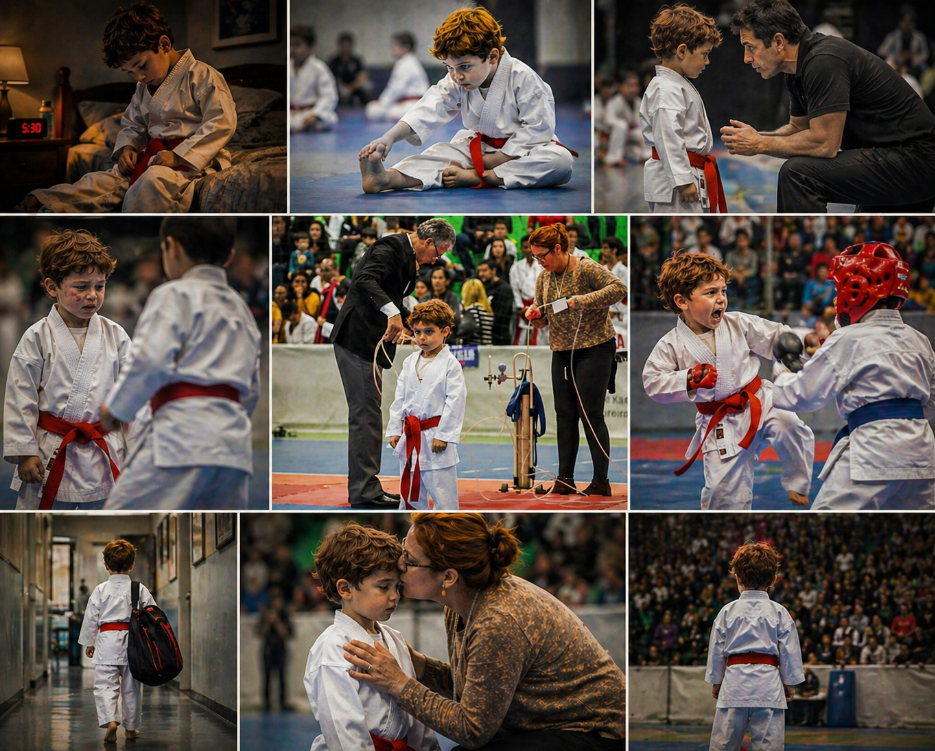
A tiny child barely reaching the waist of the adults beside him, standing on an official karate competition mat. A white gi, crisp and clean. A red belt tied firmly around that little waist. Curly hair. Bare feet flat on the mat.
Two officials, a man in a formal suit and a woman, are leaning down toward him. Adjusting. Checking. Attending to the details of competition protocol. And the child?
He is not looking up at them. He is not fidgeting. He is not searching the crowd for a familiar face.
He is just, still.
Feet planted. Eyes forward. Expression calm. Like he has been here a thousand times. Like this mat belongs to him. Like the noise, the crowd, the officials, the pressure. None of it exists.
Just him. And the mat. And whatever comes next.
What you see, and what you don't
At first glance, you see a cute child at a karate competition. Look again.
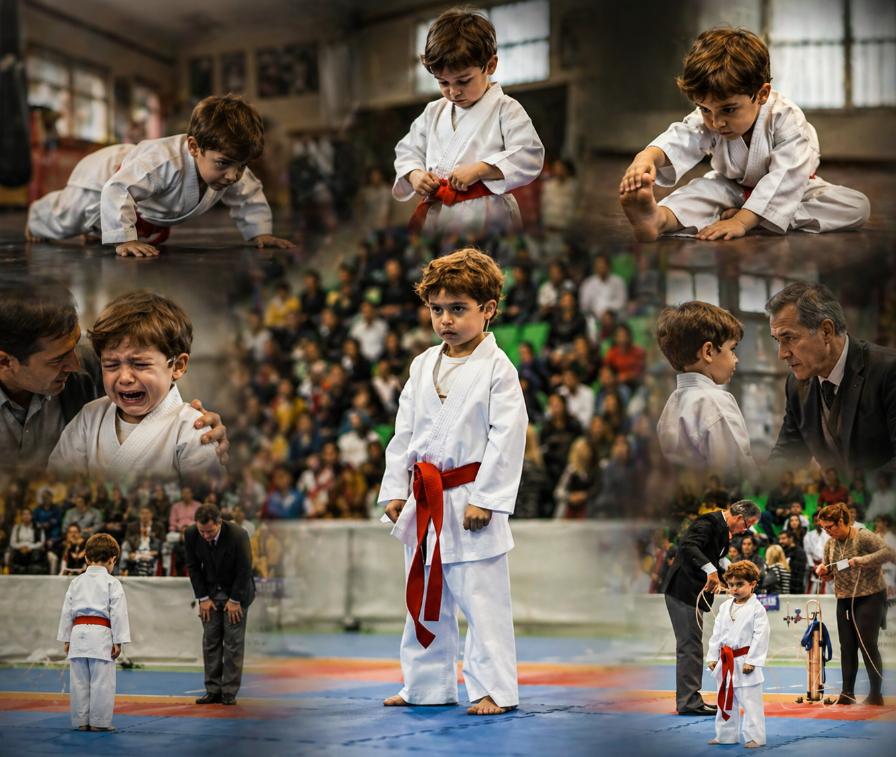
You are looking at discipline made visible. You are looking at months, maybe years, of early mornings, sore muscles, repeated falls and repeated rises. You are looking at a child who was taught that the mat is not a place of fear. It is a place of focus.
That stillness is not natural. That stillness is built.
Every child who steps onto a competition mat for the first time trembles. Their eyes dart. Their hands fidget. They look for their parent in the crowd, because the crowd is overwhelming and the mat is vast and they are very, very small.
This child is not doing any of that. Which means that somewhere between his first day in that dojo and this moment, something happened. He fell. He got up. He failed. He tried again. He cried. He came back. And he kept coming back until the mat no longer felt like a scary place.
Until it felt like home.
The red belt around a tiny waist
Let us talk about that red belt for a moment.
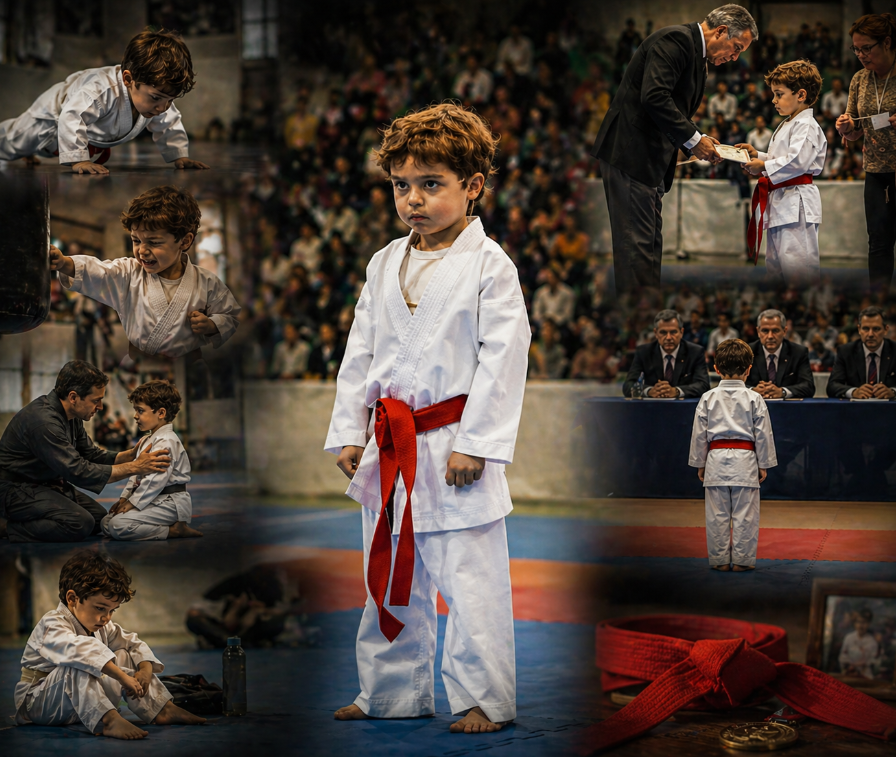
In martial arts, belts are not given. They are earned through examinations, through performance, through demonstrated skill and character under pressure. That red belt on this tiny child is not decoration.
It is evidence.
Evidence that someone assessed this child and said: you have earned this. Evidence that he stood in front of judges much like he is standing right now, and delivered. Evidence that every time practice felt too hard, or the techniques felt too complicated, or the other kids seemed more advanced, he stayed anyway.
Most adults reading this have quit something that mattered to them. A fitness goal. A creative dream. A career ambition. A relationship worth fighting for. We quit because it got hard. Because progress was slow. Because the gap between where we were and where we wanted to be felt too vast to cross.
This child, this curly haired, bare footed, impossibly small child, did not quit.
And that red belt is his receipt.
The contrast that changes everything
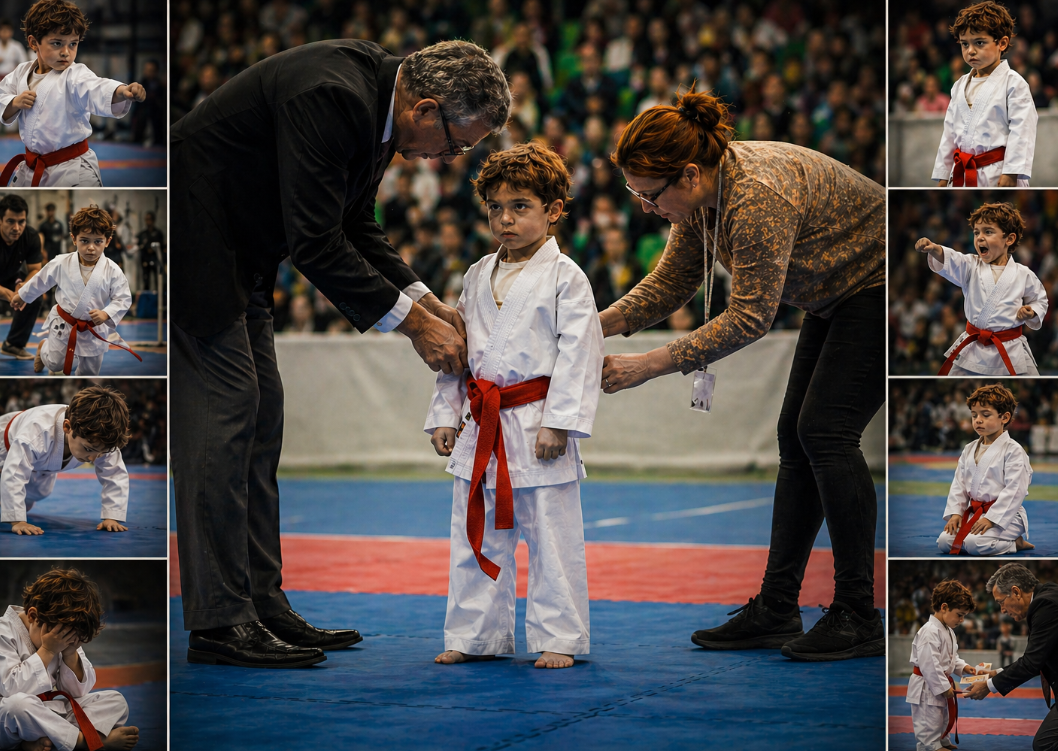
Notice the composition of this photograph. Two adults, tall, formally dressed, experienced, bending down toward one small child. The world leaning in. The child standing straight.
There is something almost poetic about it. The adults are in motion: adjusting, organising, preparing. The child is in stillness: grounded, composed, present. In most areas of life we assume the bigger person carries the energy. The authority. The confidence. The control.
This image turns that assumption on its head completely.
The child is the calmest person in the frame. He is not performing confidence for the crowd. He is not puffing out his chest or striking a pose. He is simply, genuinely at ease in a moment that would make most people deeply uncomfortable. That is not bravado. That is not showing off.
That is inner stillness. And it is the rarest thing in the world.
To every parent, coach and mentor reading this
If there is a child in your life who wakes up every morning and goes to practice, not because it is easy, but because they chose it, pay attention to them. Not just on competition day.
Pay attention to the Tuesday evenings when practice was boring. The Saturday mornings when they didn't want to get up. The moments when they fell during sparring and you saw their eyes fill up, and then you saw them blink it away and get back up.
Those moments are where character is built. The competition mat is just where character is revealed.
Your job is not to push them to win. Your job is to make sure they know that how they stand, especially when it is hard, matters more than any medal.
To the little warrior in this photo
You may never read this. You may be too young to understand the impact of what you did the moment you walked onto that mat, calm, quiet, ready, and stood while the whole world leaned over you.
But somewhere, someone saw this photograph. And they thought about the thing they have been afraid to start. The dream they put down because the arena felt too big and they felt too small. And they thought:
If that child can stand there like that, what is my excuse?
You didn't just compete that day. You inspired people who didn't even know your name.
That is not a small thing. That is everything.