Calm minds, clear goals: mental health practices that multiply focus.

You show up every day. You deliver. You push through. But somewhere between the pings, the back to back meetings and the never ending list, your mind starts running on empty.

Spread your emotions. It is a superpower, not a weakness.
Most corporate cultures quietly reward emotional suppression. Push it down. Stay professional. Move on. But science tells a very different story.
When you allow yourself to name, express and process your emotions rather than bottle them, your nervous system regulates faster, your cortisol levels drop, and your prefrontal cortex, your focus engine, comes back online. Psychologists call this emotional granularity, and people who practise it make better decisions, recover from setbacks faster, and build stronger working relationships.
You do not need to overshare in a meeting. You just need to acknowledge what you feel: in a journal, in a trusted conversation, or even silently to yourself. That single act of recognition is neurologically restorative.

Get, pause, respond. Stop reacting, start leading yourself.
Between stimulus and response there is always a space. That space is where your professionalism, your judgment and your reputation live. Train it like a muscle, because it is one.

Keep calm, decide priority. Chaos is a choice you can opt out of.
When everything feels urgent, nothing truly gets done. The modern workplace is engineered for urgency: notifications, escalations, competing deadlines. It thrives on your overwhelm. The antidote is not speed. It is stillness, followed by clarity.
Calm is not the absence of pressure. It is the ability to function with clarity inside the pressure. And that starts with one simple discipline: before you act, prioritise. Ask yourself what is the one thing that, if done today, makes everything else easier or irrelevant.
A regulated nervous system makes better prioritisation decisions than an anxious one. Every time. So calm is not a soft skill. It is a strategic one.

Practise assertive communication. Your voice is a mental health tool.
There is a version of being a team player that quietly destroys your mental health. It looks like saying yes when you mean no. Like absorbing extra work in silence. Like swallowing feedback that is unfair, because the room feels too risky to speak in.
Assertive communication is the middle path between aggression and passivity. It means expressing your needs, limits and perspectives clearly and respectfully, with process behind it. It means having the difficult conversation early, before resentment builds. It means setting expectations upfront so that no one, including you, is surprised later.
When you communicate assertively, you reduce the mental load of unspoken friction, protect your bandwidth and, crucially, model the psychological safety that makes teams perform better.
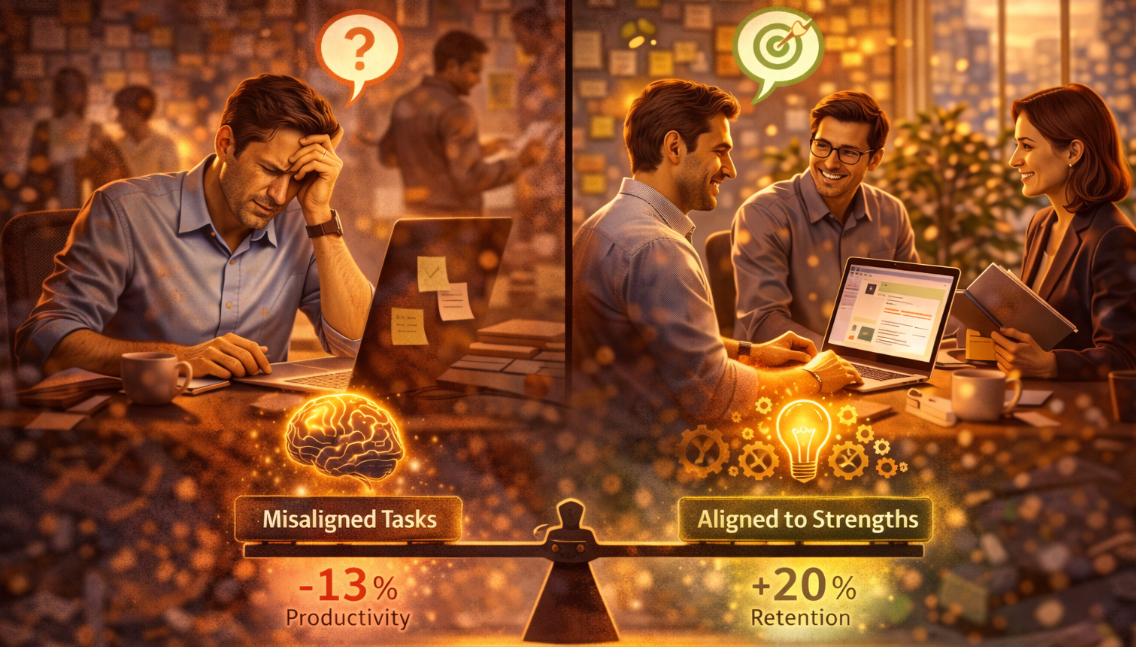
Right person, right role. The mental health case for playing to strengths.
One of the most underrated causes of workplace anxiety is misalignment: being asked to do work that sits outside your strengths, repeatedly, without any acknowledgment of that gap. It breeds self doubt, exhaustion and quiet disengagement.
Whether you are a team member or someone who influences how work gets distributed, advocating for expertise based task assignment protects more than output. It protects people.